The Child Does Not Belong to the State
A free society must answer certain questions correctly or it will soon answer many others wrongly. One of those questions is this: who bears the first responsibility for the child? The answer is not the school district, the state agency, the licensing body, the union, or the educational theorist. The answer is the parent. Schools may assist, strengthen, and supplement the work of families. They may not morally or properly replace them. Once that order is reversed, education becomes something more dangerous than mere incompetence. It becomes usurpation.
This truth is older than any present controversy, and sturdier than the latest educational slogan. The Supreme Court has long recognized family autonomy in childrearing. In Pierce v. Society of Sisters, the Court rejected an Oregon law that would have compelled children to attend public school, declaring that “the child is not the mere creature of the State.” Later, in Troxel v. Granville, the Court again affirmed that parents’ interests in the care, custody, and control of their children are protected by the Due Process Clause. These were not minor procedural rulings. They expressed a basic principle of ordered liberty: the state is not the natural sovereign over the child.
That principle does not mean parents are infallible, nor does it mean schools are unnecessary. It means something plainer and more practical. Parents hold the primary moral authority and enduring responsibility for the upbringing of their children. Schools exist because parents cannot individually provide every form of instruction, specialization, and institutional support. The school is therefore a servant institution. It exists to help families educate children, not to convert families into spectators while experts assume command.
One reason this truth must now be stated so directly is that modern institutions often behave as though parental involvement were a courtesy rather than a right. This tendency is especially dangerous in public education, where bureaucracies easily begin to confuse administrative convenience with moral authority. Yet federal law itself recognizes meaningful parental claims. FERPA gives parents the right to inspect and review their children’s education records, to seek amendment of those records, and to exercise some control over disclosure of personally identifiable information from them, until those rights transfer to the student at adulthood or postsecondary enrollment. That legal structure does not settle every dispute, but it plainly assumes that parents are not strangers to their children’s schooling.
The educational establishment often speaks warmly of partnership, but one learns the truth of an institution by watching what it resists. If parents ask to see instructional materials, to know what moral and social doctrines are being presented, to review records, or to be notified about decisions touching their child’s development, too many officials respond as though these were intrusions. The language may remain polite, but the underlying assumption is unmistakable: the professionals believe they should govern while the parents merely trust. That is not partnership. It is paternalism practiced against parents.
The defenders of this arrangement usually say that schools need room to operate. Teachers, counselors, and administrators, they argue, cannot do their work if every decision is second-guessed by mothers and fathers. There is truth in the complaint, but not enough truth to justify the conclusion. No serious person expects education to proceed by plebiscite. Schools require judgment, discretion, and routine authority. But discretion is not sovereignty. The fact that a teacher needs room to teach does not mean a parent forfeits his right to know what is being taught, what records are kept, or how the school is shaping the environment in which his child is spending much of the day.
Another objection comes wrapped in the language of child protection. Some argue that schools must at times shield children from their own parents, because some homes are negligent, chaotic, or abusive. Again, there is a narrow truth here, and it would be foolish to deny it. The state does have a legitimate role in cases of abuse, neglect, and clear danger. But exceptions are a poor foundation for ordinary policy. A society that begins with pathological cases and then treats all parenthood as a suspect condition will soon forget the normal moral order altogether. The fact that some parents fail does not entitle institutions to behave as though parenthood itself were merely provisional.
Indeed, one of the oddities of modern education is that it often combines grand claims of expertise with weak evidence of effectiveness. Parents are told to defer because the professionals know best. Yet academic results have been declining, trust has eroded, and the institutional appetite for responsibilities beyond instruction has only expanded. NCES reported that 79 percent of students in kindergarten through grade 12 had a parent or other household member attend a general school meeting during the 2022 to 2023 school year, and 52 percent had a household member serve at school or on a committee. In other words, parental involvement is not some fringe demand imposed from outside the system. It is already a major feature of school life, and federal education reporting continues to treat it as significant.
Research summaries from the U.S. Department of Education and ERIC alike have long associated parent and family engagement with improved student outcomes and stronger school functioning. The point here is not that every form of parental involvement is wise, nor that every parent meeting is fruitful. It is that the broad educational case for parent engagement is not controversial in serious research. What is controversial is whether institutions will honor that principle when parental judgment collides with administrative ideology.
There is also a larger civic issue at stake. If the state may quietly redefine the parent as an outsider to his own child’s formation, then the family becomes dependent upon institutional permission to exercise responsibilities that once belonged to it by nature and by law. This is not merely an educational problem. It is a political one. A people accustomed to delegating childrearing authority upward will eventually find that other forms of self-government have weakened as well. The habits required for liberty are not learned only in elections and legislatures. They are learned in homes where responsibility is taken seriously and in schools that remember they are answerable to the families they serve.
What then should a sane order look like? Schools should provide clear curriculum transparency, meaningful access to instructional materials, straightforward channels for record review, and prompt communication about matters that affect a child’s education and welfare. Parents, in turn, should not demand to micromanage every classroom decision. They should, however, insist on the right to know, to inspect, to question, and, when necessary, to withdraw. That is not hostility to education. It is the proper stewardship of those whose duty to the child will outlast every administrator, every policy cycle, and every fashionable doctrine.
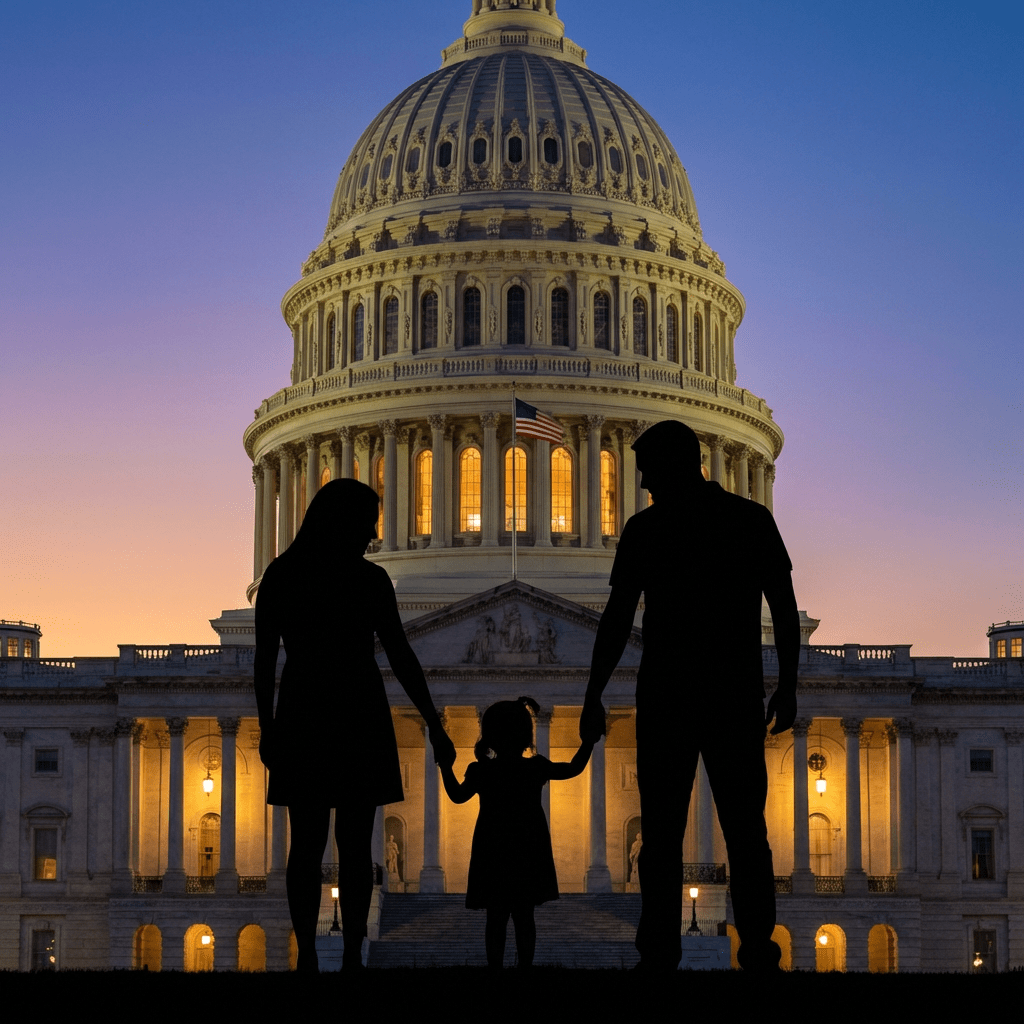
The child does not belong to the state. He is not a project for bureaucratic management, nor a vessel into which institutions may pour whatever moral and ideological content happens to prevail among credentialed adults. He belongs first within the obligations of family, where love has both a natural authority and a lasting cost. Public schools can do much good when they remember this. They become dangerous when they forget it.
Every later controversy in this series depends on that point. Curriculum battles, record disputes, transparency fights, counseling conflicts, and ideological struggles all become sharper when schools begin to behave as though parents were merely one stakeholder among many. They are not. They are first. Until education recovers that order, the conflict between family and institution will continue, and the institution, however polished its language, will deserve much of the blame.
Notes
- Pierce v. Society of Sisters, 268 U.S. 510 (1925).
- Troxel v. Granville, 530 U.S. 57 (2000).
- U.S. Department of Education, Student Privacy Policy Office, “FERPA,” accessed March 13, 2026.
- U.S. Department of Education, Student Privacy Policy Office, “What Is FERPA?” accessed March 13, 2026.
- U.S. Department of Education, Student Privacy Policy Office, A Parent Guide to the Family Educational Rights and Privacy Act (FERPA), accessed March 13, 2026.
- E. Sempeles and J. Cui, Parent and Family Involvement in Education: 2023 (Washington, DC: National Center for Education Statistics, 2024).
- U.S. Department of Education, “Parental Involvement: Title I, Part A Non-Regulatory Guidance,” 2004.
- “Supporting Parent and Family Engagement to Improve Student Outcomes,” ERIC, 2023.
Bibliography
ERIC. “Supporting Parent and Family Engagement to Improve Student Outcomes.” 2023.
National Center for Education Statistics. Parent and Family Involvement in Education: 2023. Washington, DC: U.S. Department of Education, Institute of Education Sciences, 2024.
Pierce v. Society of Sisters, 268 U.S. 510 (1925).
Troxel v. Granville, 530 U.S. 57 (2000).
U.S. Department of Education. “Parental Involvement: Title I, Part A Non-Regulatory Guidance.” 2004.
U.S. Department of Education, Student Privacy Policy Office. A Parent Guide to the Family Educational Rights and Privacy Act (FERPA). Accessed March 13, 2026.
U.S. Department of Education, Student Privacy Policy Office. “FERPA.” Accessed March 13, 2026.
U.S. Department of Education, Student Privacy Policy Office. “What Is FERPA?” Accessed March 13, 2026.
 Seeking Truth in Today's Troubled World
Leave a comment