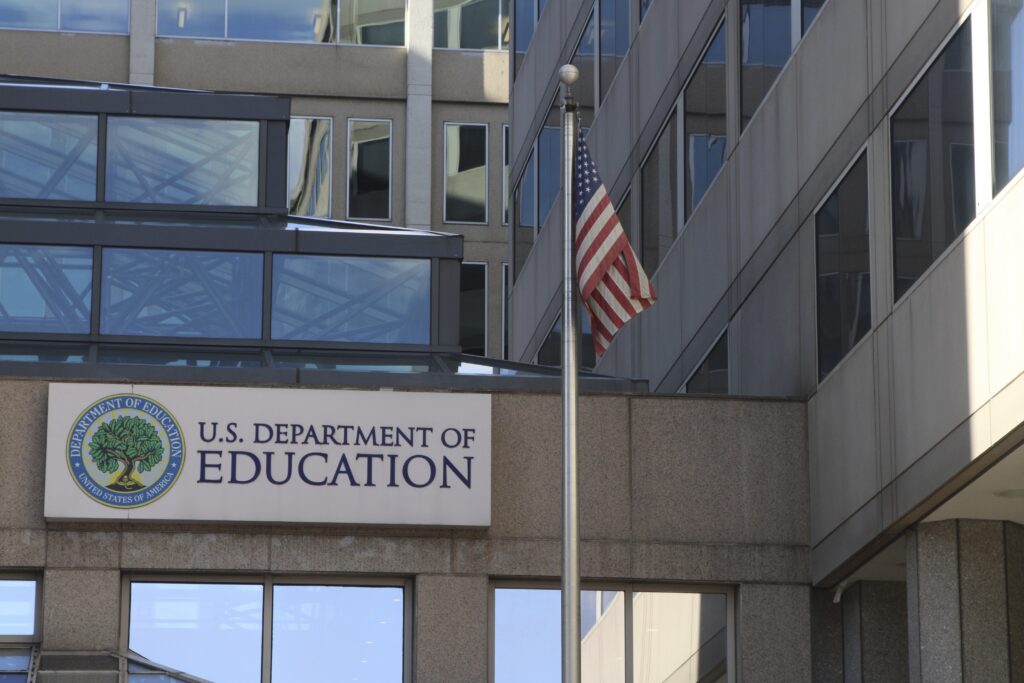
The U.S. Department of Education, established in 1979, was intended to elevate educational standards, ensure equal access, and facilitate national educational policy. Yet, after decades of federal intervention, one must ask: Has it delivered on its promises, or has it become another bureaucratic obstacle to real progress? As we analyze its impact, it becomes clear that the dissolution of the Department of Education would not only return decision-making power to local communities but also foster a more accountable, efficient, and ideologically balanced education system.
Federal Programs and Their Failures
The Department of Education oversees several major initiatives, including Title I funding for disadvantaged schools, Pell Grants for low-income students, and the Individuals with Disabilities Education Act (IDEA). While noble in intent, these programs often fall victim to inefficiency, misuse, and unintended consequences. Title I, for example, has funneled billions of dollars into struggling schools without delivering meaningful academic improvement. Pell Grants, intended to expand college access, have contributed to tuition inflation, ultimately placing a heavier financial burden on students. IDEA, while essential in protecting the rights of students with disabilities, is plagued by bureaucratic red tape that makes it difficult for schools to effectively allocate resources where they are most needed.
Two of the most prominent federal education initiatives—the No Child Left Behind Act (NCLB) and the Common Core State Standards—further highlight the flaws of centralized control. NCLB, passed in 2001, sought to close achievement gaps through standardized testing and accountability measures. However, it resulted in a perverse incentive structure where schools focused primarily on test preparation rather than genuine learning. The Common Core, introduced in 2009, was touted as a way to unify educational standards, yet it led to widespread backlash from parents and educators who saw it as a one-size-fits-all approach that stripped local districts of their ability to tailor curricula to their students’ needs. Both initiatives demonstrate how top-down policies often fail to accommodate the unique educational challenges faced by individual communities.
Beyond mere inefficiency, the financial waste within the Department of Education is staggering. The agency’s budget has ballooned over the years, yet student performance has failed to improve at a commensurate rate. Administrative costs and bureaucratic overhead consume a significant portion of funding that could be better utilized at the classroom level. Additionally, federal subsidies for higher education, such as student loan programs, have created a cycle of dependency while inflating the cost of tuition, making college less affordable rather than more accessible.
The Threat of Ideological Bias
Beyond inefficiency, the Department of Education serves as a conduit for ideological influence, often promoting a singular perspective rather than fostering true intellectual diversity. Teachers’ unions, which wield significant influence over federal education policy, have been accused of prioritizing political activism over the academic needs of students. Curricula shaped by these unions frequently emphasize social justice themes that some critics argue amount to ideological indoctrination rather than objective education.
Consider the growing controversy surrounding classroom discussions on race, gender, and history. Many parents have raised concerns that such curricula reflect a politically motivated agenda rather than an unbiased presentation of historical and social realities. The federal government’s role in promoting and funding such programs underscores the danger of a centralized educational authority that is insulated from local accountability.
Moreover, a nationalized education system creates an environment where dissenting perspectives are often silenced. When curriculum decisions are made at the federal level, parents and local school boards lose the ability to shape what their children are taught. This top-down control limits intellectual diversity and discourages critical thinking, replacing it with ideological conformity.
The Dangers of National Education Unions
National education unions, such as the National Education Association (NEA) and the American Federation of Teachers (AFT), hold significant sway over education policy, curriculum standards, and even teacher accountability. These organizations have become powerful political entities that often prioritize their own interests—such as securing higher wages and job protections for teachers—over the educational well-being of students. While protecting teachers’ rights is not inherently harmful, these unions frequently resist performance-based accountability measures, making it nearly impossible to remove underperforming educators. This entrenched protectionism stifles innovation and reduces incentives for educators to improve teaching methods and student outcomes.
Moreover, national unions have been accused of using their influence to push political agendas that extend beyond education. From promoting divisive social policies to funding partisan initiatives, these organizations often blur the lines between education and activism. The result is a school system that is more focused on political indoctrination than on providing students with the critical thinking skills necessary to form their own independent opinions. By dissolving the Department of Education, we remove a crucial mechanism through which national unions exert their control over schools, allowing for greater diversity in educational approaches and perspectives.
The political power of these unions is another pressing concern. Through extensive lobbying and campaign contributions, they wield disproportionate influence over policymakers, ensuring that their interests—rather than those of students and parents—dominate education policy discussions. This entrenched power structure makes meaningful reform virtually impossible and perpetuates the inefficiencies and ideological biases that plague the public education system.
The Case for Local Control
Dissolving the Department of Education would place decision-making power back into the hands of states, local school districts, and parents—those who best understand the needs of their communities. A decentralized approach would foster innovation, allowing different regions to experiment with educational models that reflect their unique demographic, economic, and cultural circumstances. The competitive nature of state-led education policy would drive improvements in teaching quality, curriculum effectiveness, and student outcomes.
Additionally, removing federal oversight would reduce the stranglehold of teachers’ unions on education policy, making it easier to implement accountability measures that reward effective teaching and eliminate ineffective bureaucratic mandates. Without the Department of Education acting as a political intermediary, schools would be free to prioritize educational excellence over ideological conformity.
A return to local control would also enhance parental involvement. Parents have a vested interest in their children’s education, yet under a federally controlled system, their influence is often diminished. By placing education policy in the hands of those directly affected by it, we empower parents and communities to take an active role in shaping their schools.
Conclusion
The Department of Education, despite its lofty promises, has become emblematic of the inefficiencies and unintended consequences of federal overreach. From ineffective programs to ideological influence, its continued existence poses more harm than benefit to American students. The unchecked power of national education unions has only compounded these issues, entrenching political activism within the classroom and making real reform nearly impossible. By dissolving this bureaucratic institution and returning control to the local level, we can restore educational autonomy, encourage diversity of thought, and ensure that education serves as a tool for genuine learning rather than political indoctrination. President Trump’s administration has rightly questioned the necessity of such a department, and now is the time to take decisive action in favor of a freer, more effective education system.
In Christ’s service,
~JFH
Bibliography
- Sowell, Thomas. “Inside American Education: The Decline, the Deception, the Dogmas.” Free Press, 1993.
- Ravitch, Diane. “The Death and Life of the Great American School System: How Testing and Choice Are Undermining Education.” Basic Books, 2016.
- Greene, Jay P. “Education Myths: What Special Interest Groups Want You to Believe About Our Schools—And Why It Isn’t So.” Rowman & Littlefield, 2005.
- Chubb, John E., and Terry M. Moe. “Politics, Markets, and America’s Schools.” Brookings Institution Press, 1990.
 Seeking Truth in Today's Troubled World
Leave a comment