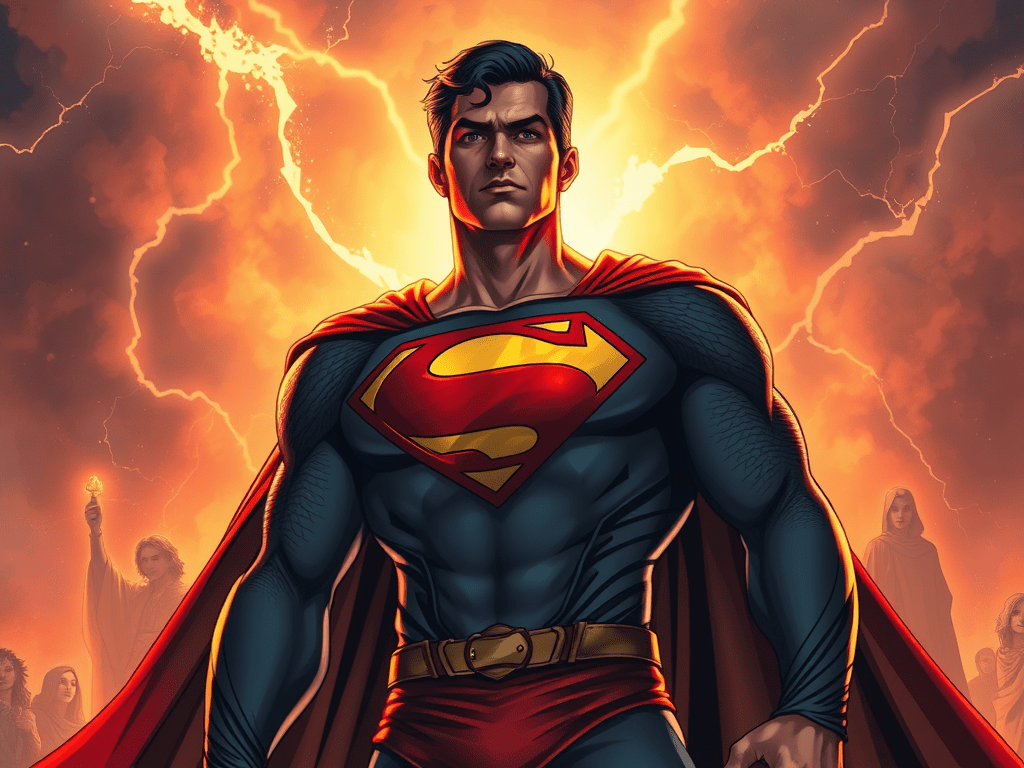
Superman, one of the most iconic superheroes in the DC Comics universe, is often portrayed as an almost invincible being with powers beyond human comprehension. Despite his incredible strength, speed, and flight abilities, Superman, also known as Clark Kent, is not without weaknesses. His vulnerabilities, particularly Kryptonite and magic, serve as symbols of human fragility and point to a central theme that resonates across both comic book narratives and the Bible—the struggle with sin, the inherent weaknesses of human nature, and the need for redemption. Through comparisons to key biblical characters, such as Adam, Eve, King David, and even Jesus Christ, we see that both Superman and sinners in the biblical tradition experience challenges and require salvation. Furthermore, examining the supporting characters in Superman’s world—Lois Lane, his love interest, and Lex Luthor, his arch-enemy—reveals deeper reflections on biblical themes of love, temptation, pride, and the ongoing battle between good and evil.
Superman’s Struggles and Weaknesses
Superman is the epitome of power, often seen as an ideal of justice and moral integrity. His alter ego, Clark Kent, works as a journalist at the Daily Planet, using his human guise to understand the world and its people. However, despite his superhuman abilities, Superman is not impervious to every threat. His primary vulnerability is Kryptonite, a mineral from his home planet Krypton, which saps his powers and can ultimately kill him. Kryptonite represents Superman’s connection to his lost home and his alien heritage. It serves as a reminder that, despite his god-like abilities, he is not invincible and is still bound to his past in ways that shape his identity.
Another key weakness is Superman’s vulnerability to magic. While he can withstand most physical threats, magic represents an unknown force that even Superman cannot defend against. This echoes the spiritual struggles of humanity, who, despite their strengths, are often powerless against forces that are beyond human comprehension—be it temptation, sin, or the influence of evil.
These vulnerabilities in Superman’s character are strikingly similar to the struggles faced by biblical figures, who wrestle with their own weaknesses and the temptation of sin. Just as Superman faces threats that expose his vulnerability, biblical characters encounter forces—both external and internal—that reveal their limitations and need for divine intervention.
Lois Lane: Love, Redemption, and Sacrifice
Lois Lane, Superman’s love interest, plays a pivotal role in his story. As a journalist and one of the most intelligent and courageous characters in the DC Universe, Lois is Superman’s emotional anchor. She represents the “human” element that connects Superman to the Earth and its people. Despite Superman’s superhuman strength, it is often Lois’ unwavering love and faith in him that serves as a source of strength. She challenges him, encourages him to remain grounded, and, at times, helps him see the worth of humanity through her own eyes.
Biblically, Lois can be compared to the concept of unconditional love and faith. She embodies many of the virtues that Christian teachings celebrate: loyalty, compassion, and sacrifice. She is a symbol of the kind of love that is selfless and unwavering—much like Christ’s love for humanity. In the Bible, Christ sacrifices Himself for the redemption of humanity, and similarly, Lois’s relationship with Superman, at times, requires sacrifices and selflessness. Her constant support mirrors how believers are called to remain steadfast in their faith, even when the world (or the challenges Superman faces) seems impossible to overcome.
Lois’ role also reflects the relationship between believers and God. Just as Lois helps Superman remain connected to his human side, the Bible speaks of God’s love as the ultimate sustaining force for believers. God’s love allows sinners to remain faithful, offering a chance for redemption and the strength to endure trials (Romans 5:8). Lois’ support serves as a metaphor for the believer’s relationship with Christ—rooted in love, providing strength in the midst of challenges, and ultimately leading to salvation.
Lex Luthor: Pride, Temptation, and the Enemy of Good
Lex Luthor, Superman’s arch-nemesis, is a complex character driven by ambition, pride, and a desire for power. Luthor is often depicted as a brilliant but flawed businessman who sees himself as superior to others, including Superman. His intellectual superiority and ego lead him to believe that humanity can thrive without Superman, whom he views as a threat to human independence. In his quest for control, Luthor constantly plots against Superman, using his intellect and resources to exploit Superman’s vulnerabilities.
Lex Luthor can be seen as a representation of pride and the desire for self-sufficiency—traits that the Bible repeatedly warns against. In 1 John 2:16, the “lust of the flesh, the lust of the eyes, and the pride of life” are identified as temptations that lead people away from God. Luthor’s refusal to acknowledge Superman’s benevolent nature mirrors the biblical rejection of God’s authority. Just as Luthor believes that humanity can exist without Superman’s influence, the Bible warns that pride and reliance on one’s own abilities can lead to destruction (Proverbs 16:18).
In his opposition to Superman, Luthor also represents the spirit of rebellion against the divine order. The Bible speaks of Satan as the ultimate adversary of God, leading others to challenge God’s authority (Isaiah 14:12-15). In many ways, Luthor’s attempts to overpower Superman, driven by pride and a desire for control, reflect the biblical narrative of the Fall, where Lucifer (later Satan) rebelled against God’s sovereignty.
Kryptonite, Magic, and the Occult: Biblical Parallels
Superman’s vulnerabilities to Kryptonite and magic provide an allegory for the biblical concept of sin and the forces of evil. Kryptonite, with its ties to Superman’s past, symbolizes how people are often held back by their own histories or the destructive patterns of sin. In Romans 3:23, Paul writes, “For all have sinned and fall short of the glory of God,” signifying how all people are affected by their inherent sinful nature. Just as Superman is tied to the weakness of Kryptonite, humanity is bound to sin by nature, which is only overcome through redemption in Christ.
Magic, as a supernatural force that Superman cannot defend against, mirrors the allure of the occult and other spiritual dangers that the Bible warns against. In Deuteronomy 18:10-12, God forbids the Israelites from engaging in occult practices, associating them with demonic forces that can corrupt and destroy. Similarly, the Bible speaks about spiritual forces that lead people away from the truth and into sin (Ephesians 6:12). Magic, in Superman’s world, becomes a stand-in for all that is mysterious and uncontrollable—forces that humans, no matter how powerful they may be, cannot conquer without divine help.
Salvation Through Jesus Christ
Ultimately, both Superman’s struggle and the story of biblical characters like Adam, Eve, and King David point to a common truth: redemption is needed to overcome weaknesses. For Superman, redemption often comes in the form of hope, love, and self-sacrifice. For sinners in the Bible, redemption is found through faith in Jesus Christ, whose death and resurrection provide the ultimate victory over sin, death, and the forces of darkness (John 14:6, Romans 6:23).
Superman’s journey—marked by moments of weakness and vulnerability—parallels the Christian narrative that true strength and victory come not from human effort, but through the grace and love of Christ. Just as Lois helps Superman overcome his weaknesses with love and faith, Jesus Christ offers humanity the path to salvation through His sacrifice, empowering believers to live victorious lives, no longer enslaved by the Kryptonite of sin.
Humbly yours, JH
Bibliography
- The Holy Bible, New International Version (NIV). Zondervan, 2011.
- Kent, Clark. “Superman: The Man of Steel.” DC Comics, 1986.
- Miller, Frank. The Dark Knight Returns. DC Comics, 1986.
- Snyder, Zack, director. Batman v Superman: Dawn of Justice. Warner Bros., 2016.
- Walker, Benjamin. The Superhero Symbol: A Comparative Study of Archetypes. Princeton Press, 2020.
- Winn, Eric. Lex Luthor: The Quest for Power and Identity. Columbia University Press, 2019.
 Seeking Truth in Today's Troubled World
Leave a comment